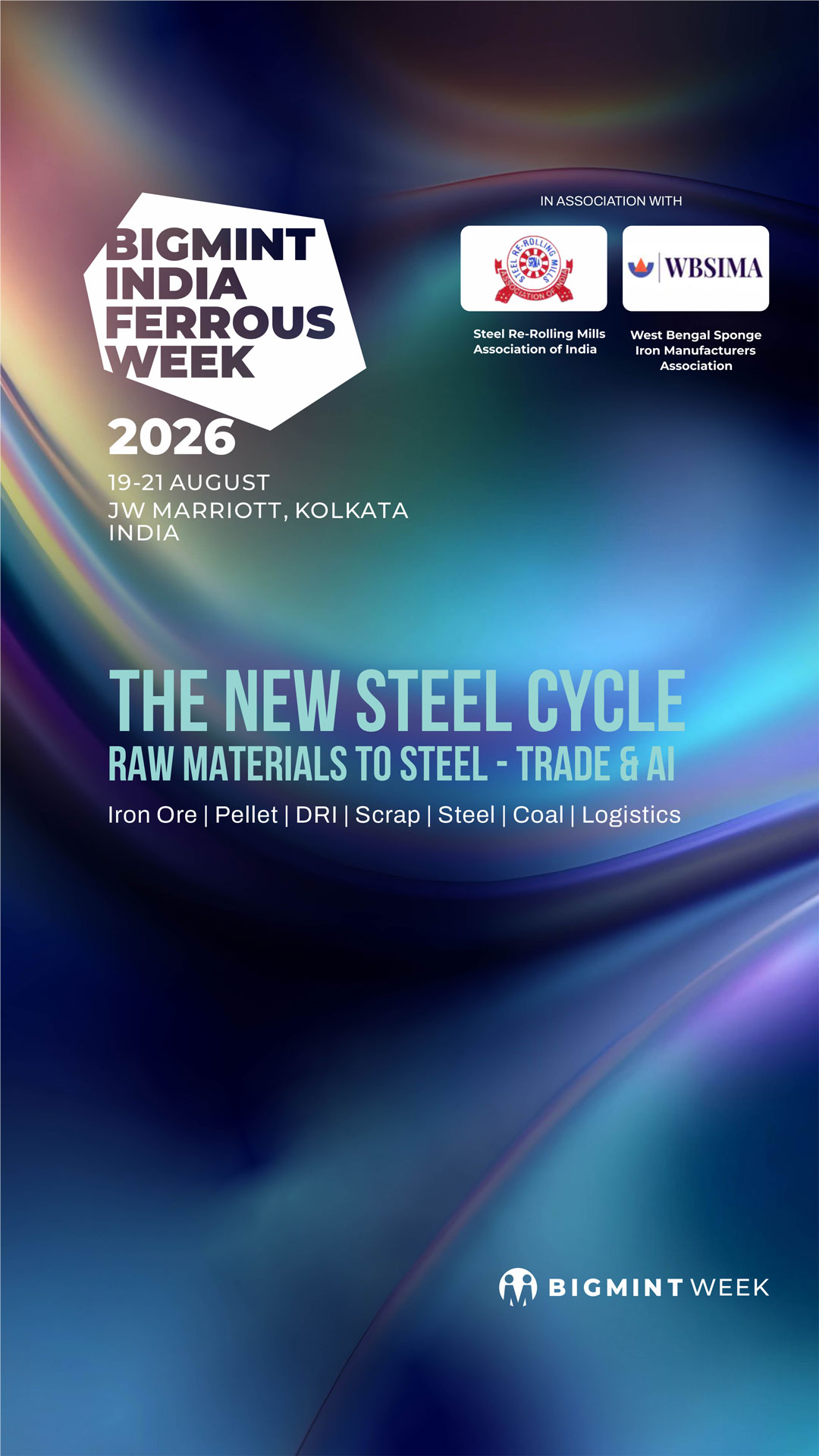
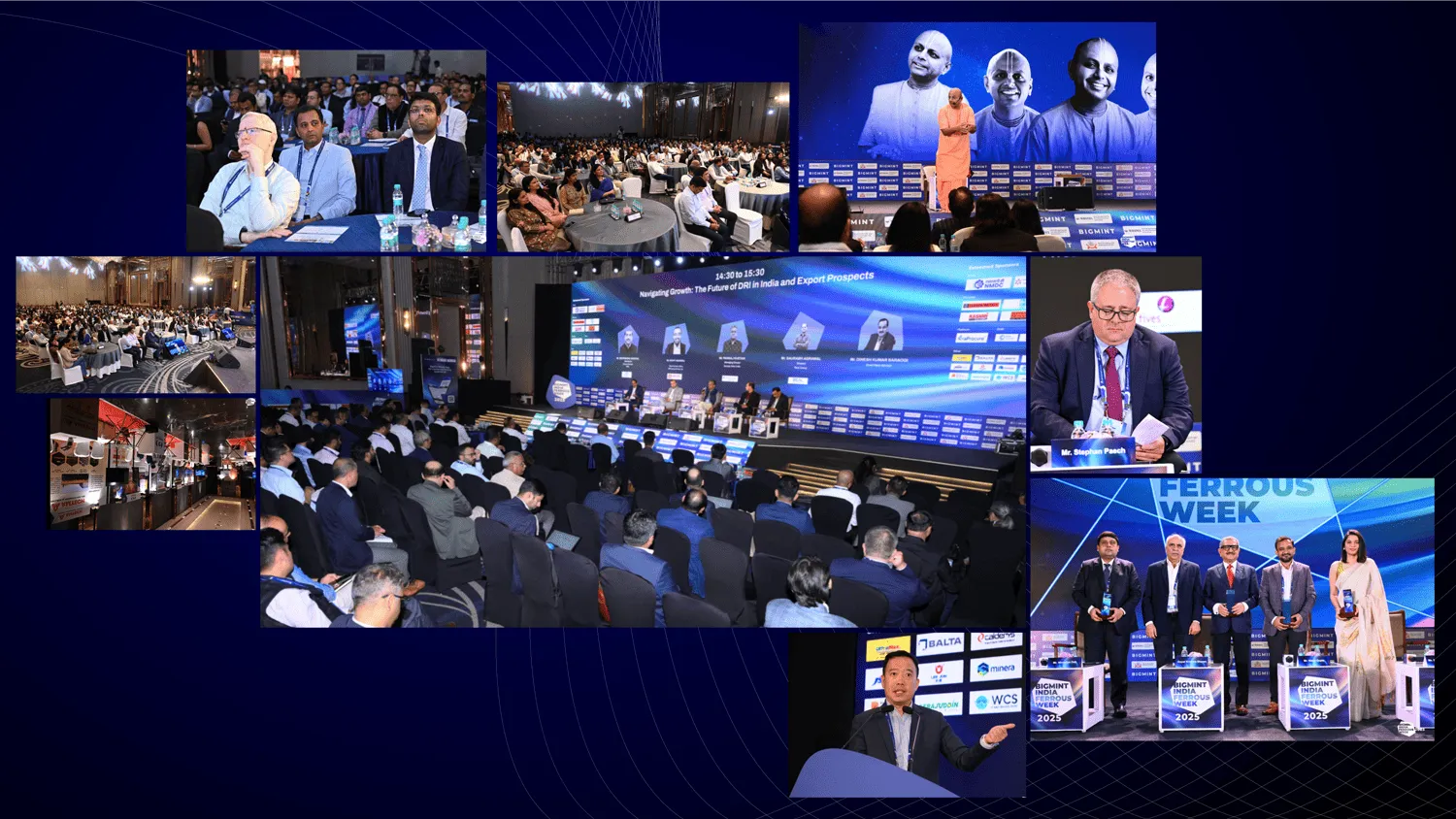
BigMint India Ferrous Week 2026 is a flagship three-day international conference that brings together the entire Indian ferrous ecosystem under one roof. The event serves as a high-impact platform for in-depth discussions on market trends, policy frameworks, pricing dynamics, supply-chain challenges, and technological innovations shaping India’s iron and steel industry.
Since its inception in 2014, BigMint’s annual ferrous conference has evolved into one of the most influential gatherings for the metals and mining community. Over the years, it has earned strong credibility for delivering actionable market intelligence, thought leadership, and unmatched networking opportunities.
With participation from 25+ countries, the conference consistently attracts senior decision-makers from steel producers, iron ore miners, pellet manufacturers, DRI and scrap players, coal suppliers, traders, policymakers, and technology providers. Each edition raises the benchmark for industry dialogue and collaboration.
BigMint India Ferrous Week 2026 will once again integrate:
Together, these three conferences create a comprehensive and strategic forum covering the entire ferrous value chain—from raw materials to finished steel.
The steel industry is at a critical juncture. While India’s infrastructure growth and manufacturing push continue to support demand, the sector is grappling with price volatility, raw material constraints, shifting trade flows, policy uncertainty, and rising decarbonisation pressures. Aligning demand growth with sustainable supply has become one of the biggest challenges for steelmakers and raw material suppliers today.
BigMint India Ferrous Week 2026 provides the platform to address these challenges head-on. By bringing together key stakeholders across iron ore, coal, DRI, scrap, and steel, the conference enables data-driven discussions, market clarity, and collaborative solutions—helping the industry navigate current demand complexities and plan confidently for the future.
1. Can India Sustain a Long-Term Steel Supercycle?
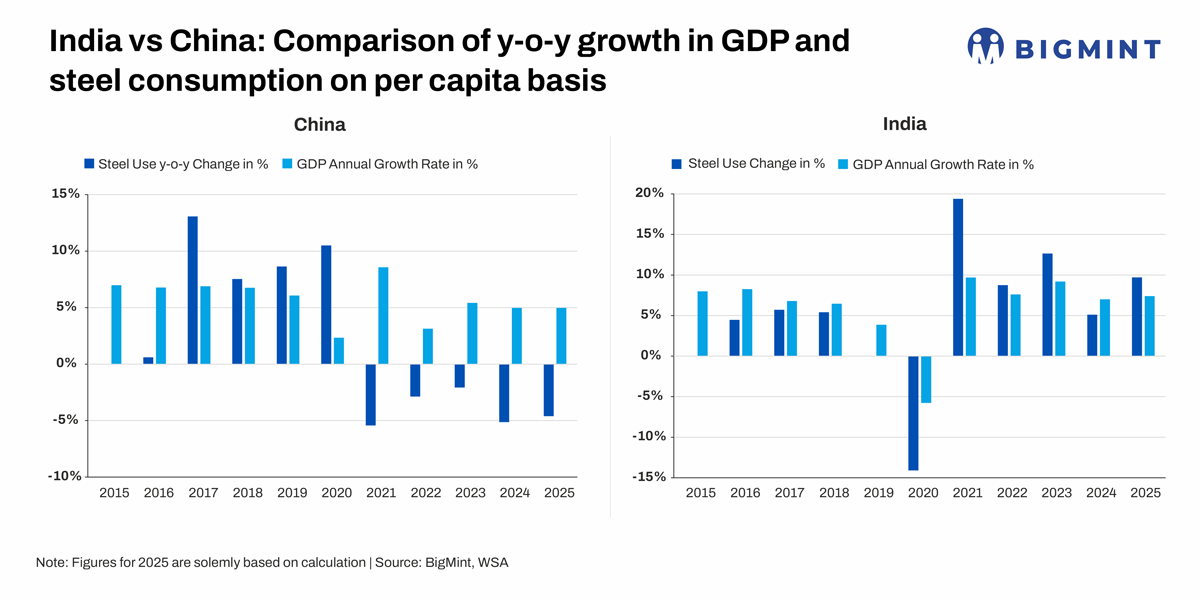
2. Economic Growth, Consumption Trends and China Comparisons
3. Global Steel Cycle & India's Positioning: Capital, Competitiveness and the Next Investment Wave
1. How is India positioned in the evolving global steel landscape, and what will drive the journey towards the 300 MnT vision by 2030?
2. Can domestic steel capacity expansion and supply chains keep pace with rising demand from infrastructure, urbanisation, railways, defence, and renewable energy sectors?
3. Growing capacity & self-sufficiency — how can India strengthen raw material security, reduce import dependence, and enhance global competitiveness? The raw material challenge — ensuring availability, quality, and cost competitiveness for iron ore, coking coal, scrap, and pellets.
4. Value-added & specialty steel — opportunities in domestic demand, exports, and advanced manufacturing.
5. How will policy support, specialty steel growth, decarbonisation, CBAM, and technology transition reshape India’s steel industry and export opportunities in the next growth cycle?
1. Demand-supply outlook for key steelmaking raw materials - iron ore & coal
2. Resource security challenges amid rising steel capacity additions
3. Logistics and evacuation infrastructure requirements
4. Impact of decarbonization on future raw material procurement strategies
1. How will Simandou’s phased ramp-up reshape seaborne iron ore supply dynamics?
2. How are China’s steel production curbs cascading into shifts in iron ore demand?
3. Is the growing acceptance of Fe 61% fines redefining traditional pricing benchmarks?
4. Global dearth of high-grade ore - how are mills adapting to new feedstock strategies amid changing raw material specifications, economics and quality preferences?
1. Export curbs and their impact on global scrap trade.
2. Can India secure imports amid intensifying buyer competition?
3. Freight volatility and changing import economics.
4. Alternative origins: opportunity or necessity?
5. Will imported scrap prices remain structurally elevated?
6. Evolving procurement strategies in a volatile market.
1. Are quality constraints in domestic iron ore becoming a key bottleneck for efficient steel production?
2. Evolving technologies, decarbonisation and outlook on iron ore grade depletion
3. Can infrastructure upgrades, slurry pipelines, and supportive policies reduce inter-regional dependence and improve supply efficiency?
4. How are regional imbalances—surplus in eastern India versus deficits in western and southern markets—impacting iron ore trade flows?
1. Power demand outlook & industrial growth, urbanisation, and extreme weather patterns
2. Will coal continue to dominate India’s power generation mix well after 2030?
3. How significant is the production ramp-up from domestic miners and commercial coal mining in meeting rising demand?
4. Bridging quality gaps in domestic coal supply and imports
5. India & global thermal coal trade dynamics
1. Is the rapid rise in pellet capacity translating into optimal utilisation or overcapacity?
2. Is the pellet market structurally shifting from an export-led model to a domestic demand-driven one?
3. Increasing dependence on beneficiation and utilisation of lower-grade ore?
4. How competitive are imported pellets compared to domestic in terms of cost and quality?
1. How effective are government initiatives in enhancing domestic coking coal production?
2. Is commercial mining and increased private sector participation a game changer for India’s coal sector?
3. Coal washing economics in India - quality and usability of Indian coking coal
4. Coal washing technologies & suitability for Indian coal
1. Women’s representation in the steel ecosystem and why it needs to grow.
2. The barriers women still face in a male-dominated industry and what helps them move ahead.
3. The role of mentors, allies, and workplace culture in enabling career growth.
4. What men and women in the industry can do to build a more inclusive leadership pipeline.
1. What are the key AI use cases across blast furnaces, rolling mills, and casting processes?
2. How can AI enable real-time process control and parameter optimisation in steel production?
3. In what ways will AI drive quality optimisation, defect reduction, energy efficiency, and cost savings?
4. How will AI-powered supply chain and logistics intelligence reshape steel industry competitiveness?
5. How will AI optimize fuel/raw material mixes to cut costs?
6. How will AI enable dynamic sourcing, inventory planning, and real-time balancing of cost, quality, and emissions?
1. NMDC's roadmap and key mine expansion projects
2. NMDC's approach to iron ore pricing amid volatile domestic and global markets
3. Challenges and opportunities in supporting India's ambition of reaching 300 MT steel capacity by 2030
1. Global positioning of India in alloy steel
2. Current capacity, production & consumption of India's alloy steel industry
3. Demand outlook till 2030
4. Capacity expansion plans
1. Is domestic iron ore production scaling up in line with rising demand? Focus on ramp-up plans of major miners.
2. How is the balance between merchant and captive mining evolving, and what does it mean for market availability and pricing?
3. Has beneficiation and pelletisation become a necessity rather than a choice in addressing quality and supply constraints?
1. How are mining companies approaching capacity expansion, and what role does integration strategy play in securing long-term competitiveness?
2. To what extent can domestic supply effectively cater to the rising iron ore demand in western and central India?
3. How are steelmakers leveraging customised burden mix strategies to optimise cost and operational efficiency?
1. Green steel taxonomy, methodologies & system boundaries – a unified MRV system for India
2. Green steel definitions – global convergences and differences
3. Border carbon taxes & the case for a global green steel methodology
4. Green procurement, CCTS & evolving demand for green steel
5. Sector-wise mapping of low-CO2 steel demand
1. Import diversification and strategic overseas acquisitions — key to ensuring long-term coking coal supply security for India’s steel industry.
2. The premium coal market & emerging global supply threats — how are Indian steelmakers responding through blending strategies, contracts, and hedging mechanisms?
3. Can domestic met coke production and capacity expansion keep pace with rising blast furnace demand amid growing import dependence and anti-dumping duties (ADD)?
4. Coke quality concerns, raw material optimisation, and the role of technology in improving blending efficiency and cost competitiveness.
5. Global met coke trade dynamics — rising captive capacity vs. merchant production, and whether Indonesia has emerged as a competitive and reliable supplier for India.
1. Policy support, supply stabilisation and the threat of grade deterioration – how will industry respond?
2. How has the MMDR Amendment act & auction regime impacted supply stability and price discovery in the iron ore market?
3. India’s own National Mineral e-Exchange – will it address issues related to transparency in pricing and reporting?
4. High regulatory mining costs & need for rationalisation
1. Are ongoing and planned port capacity additions sufficient to meet future trade and cargo handling requirements?
2. What are the key evacuation infrastructure challenges limiting efficient movement from ports to hinterlands?
3. Can coastal shipping emerge as a viable solution to decongest rail and road networks?
4. How can private participation and PPP models accelerate port development and improve efficiency?
1. Can India shift from steel volume growth to value leadership through decarbonisation?
2. What are the BATs in mining and steelmaking to cut emissions?
3. How viable are disruptive technologies like hydrogen steelmaking, CCUS, and renewable integration for India’s steel sector?
4. Makeshift, transitional & deep decarbonisation technologies
1. Comparing India with China, Japan, Korea and Europe
2. Exploring new markets & export opportunities for Indian alloy steel players
3. Cost competitiveness & ESG compliance against global peers
1. DRI-led, scrap-intensive, or hybrid: what will define India’s future metallic mix?
2. Can scrap availability match India’s steel capacity expansion?
3. Will quality steel demand increase the share of processed scrap?
4. Are rising costs and regulations weakening DRI’s advantage?
5. Optimising the DRI-scrap mix: yield, productivity, and cost
1. What are the key drivers of freight rate volatility—demand swings, fleet availability, or port congestion?
2. How will IMO decarbonisation regulations reshape shipping costs and fleet dynamics?
3. What impact are geopolitical conflicts and sanctions having on global shipping routes and trade flows?
1. Passenger vehicles and commercial vehicles outlook
2. EV penetration impact
3. High-strength alloy steel requirements
4. OEM procurement strategies
1. Contracting practices across automotive, engineering and industrial sectors
2. Need for transparent market references for contract settlements
3. Best practices for sharing raw material risks between buyers and suppliers
4. Roadmap towards greater transparency and liquidity in alloy steel markets.
1. What opportunities exist in high-strength rails, wheels, axles, bogies, couplers, and freight wagon components?
2. How are requirements evolving for armoured vehicles, naval vessels, artillery systems, missiles, and aerospace defence equipment?
3. How can Indian manufacturers integrate into global aerospace supply chains?
1. Which special steel grades are still largely imported?
2. What supply chain vulnerabilities could impact India's manufacturing ambitions?
3. Which steel grades used in defence, aerospace, railways and energy sectors are still imported?
4. What technological upgrades are required for domestic production?







22-June-2026
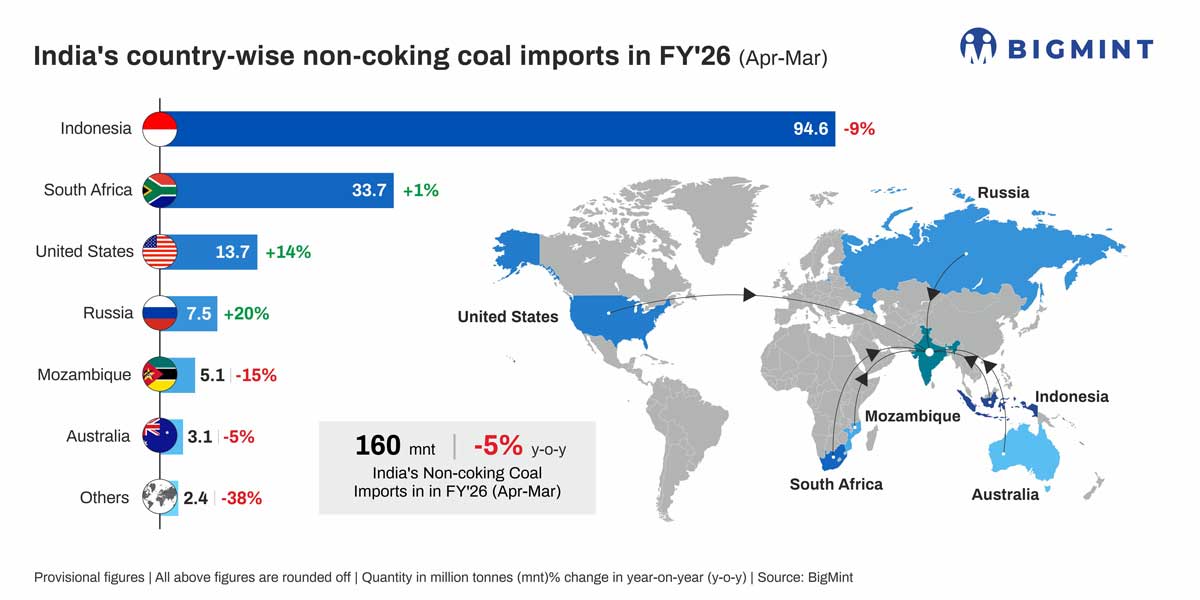
Surge in renewables output helps offset coal demand from power sector Rising seaborne coal prices, freight costs erode import competitiveness CIL's pithead stocks remain elevated despite weaker production in Jan-MayMorning...
16-June-2026
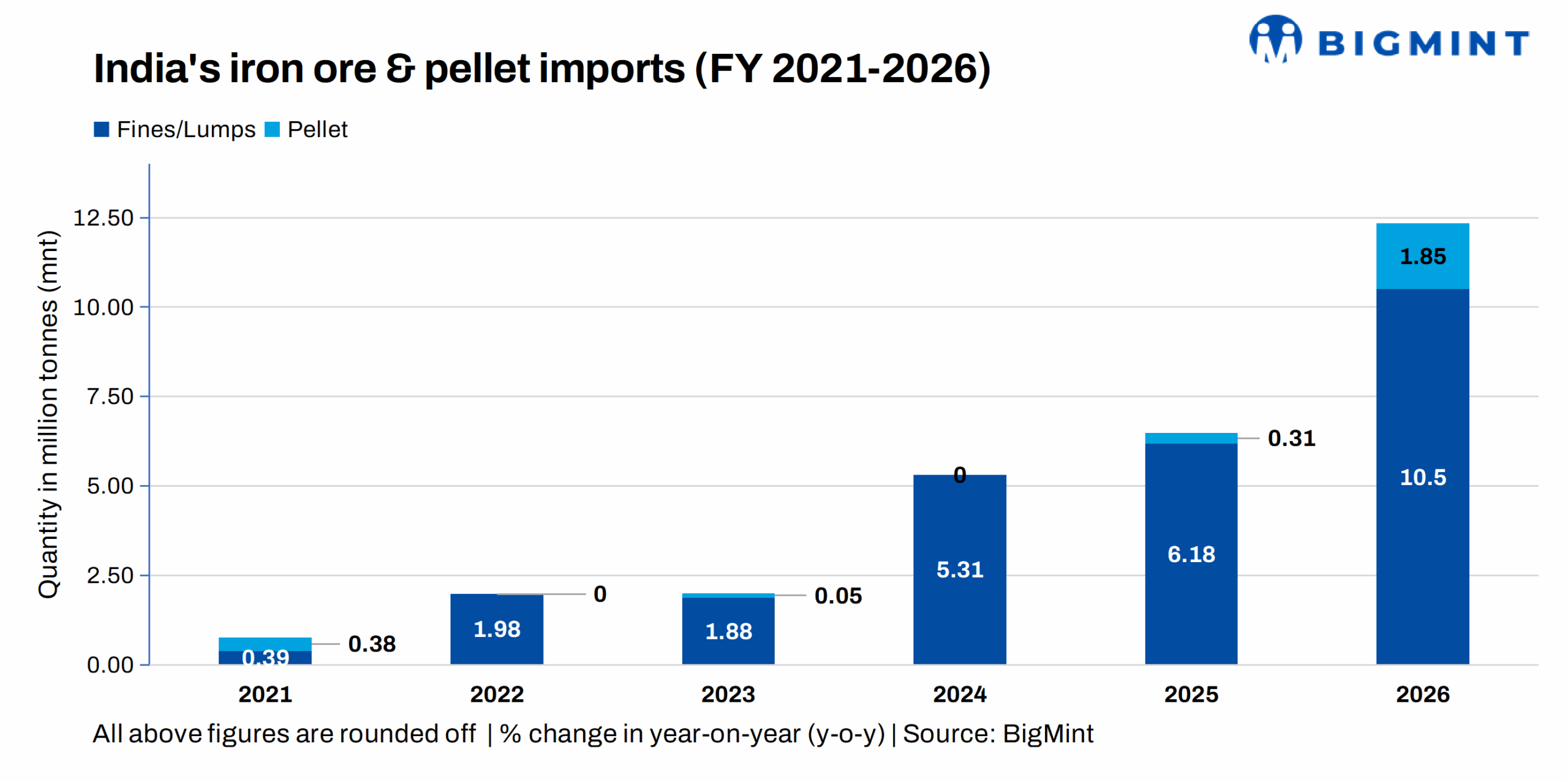
Iron ore and pellet imports reach around 4.8 mnt in 5M CY'26 Lump imports surge as Iran disruption affects pellet shipments Iron ore imports edge up despite growth in domestic...
15-June-2026
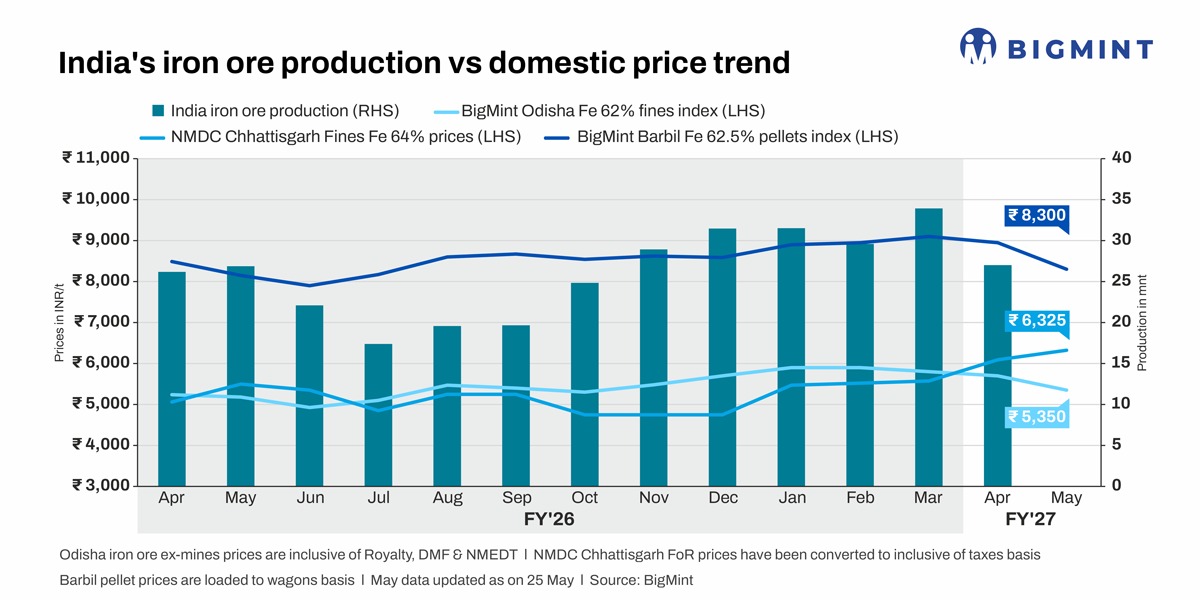
Captive utilisation falls 4 percentage points as production remains flat y-o-y High auction premiums, taxesand complex regulations slow mine developmentData Deep Dive:India's iron ore mining capacity continued to rise in...
29-May-2026
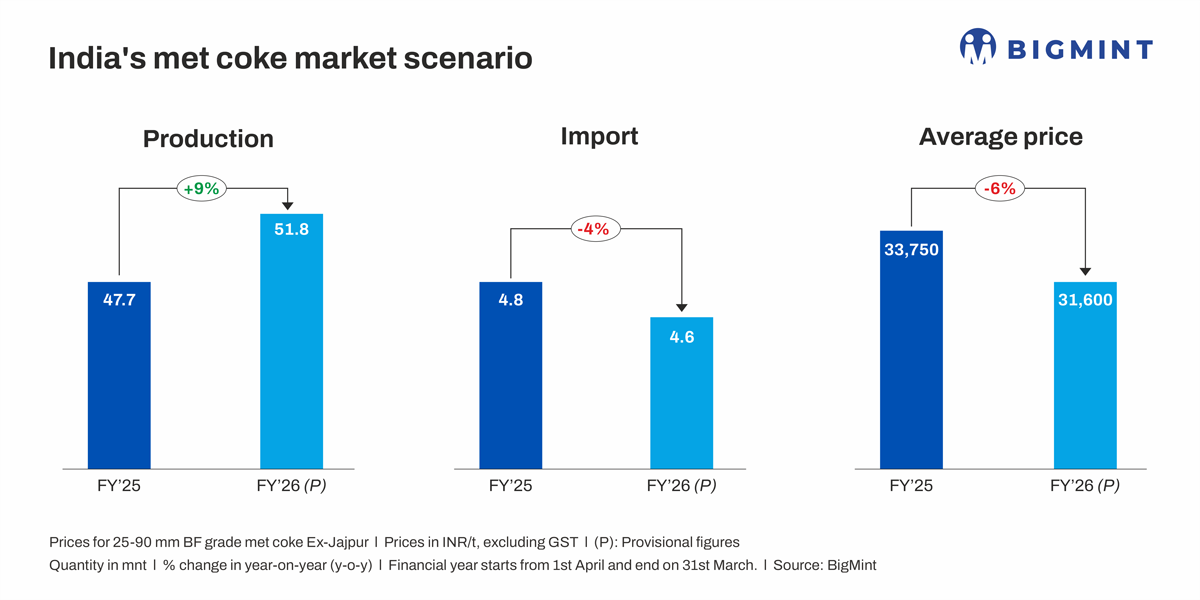
Landed costs of imports remain lower despite anti-dumping duty High ash content of domestic coke reduces steelmaking efficiencyData Deep Dive: India's metallurgical coke imports are expected to reach a multi-year-high...
27-May-2026
OMC auction bid corrections drag Odisha iron ore prices lower Pellet, sponge iron and billet weakness weighs on raw material sentiment Fresh mine output additions likely to keep domestic supplies...
26-May-2026
Indian, Chinese per capita GDP rates surge by 70% over 2015-25 India's per capita steel use rises 69% from 2015, China's up only 20%Data Deep Dive: For decades, China defined...
26-May-2026
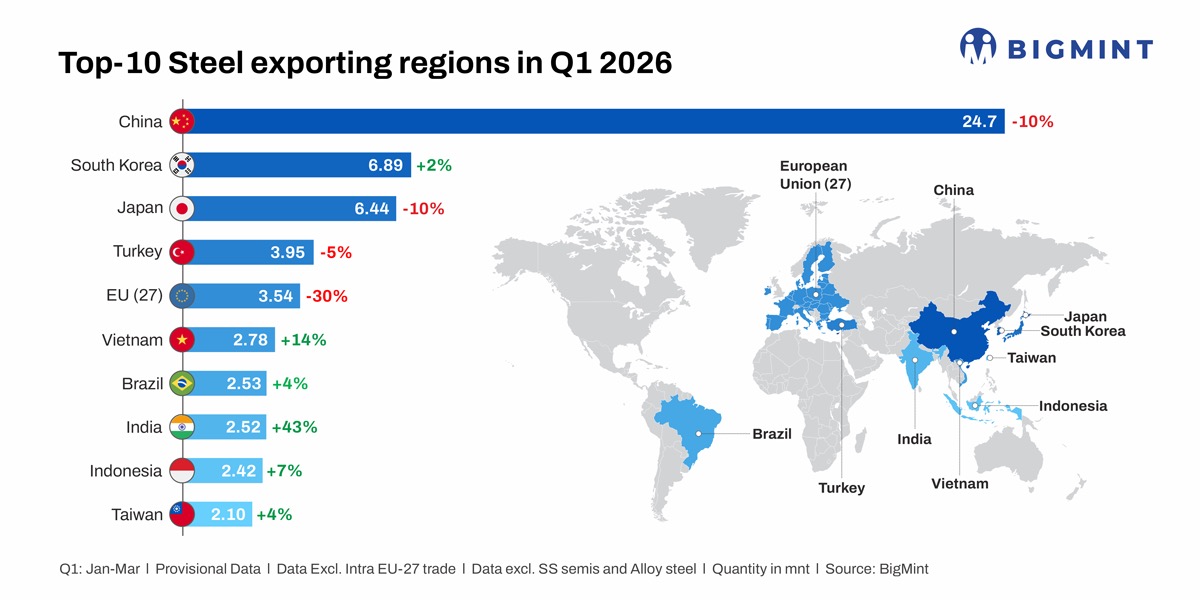
China remains dominant exporter despite 10% y-o-y decline in shipments India records strongest export growth among major exporters US, India imports fall sharply as trade barriers reshape flowsMorning Brief: Global...
15-May-2026
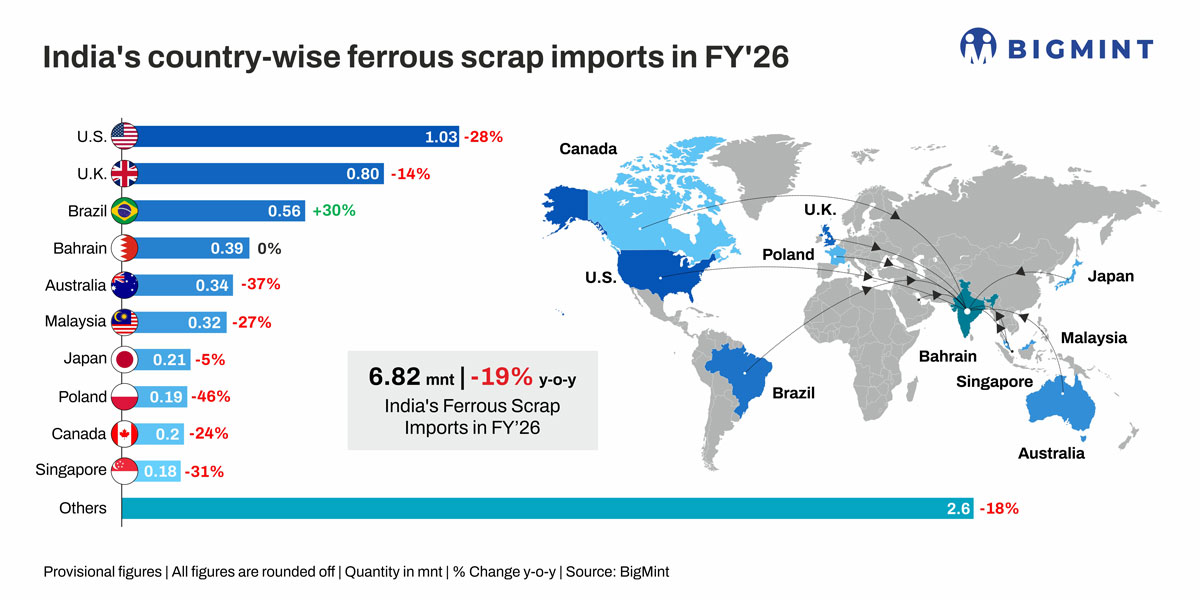
India's ferrous scrap imports see steepest y-o-y drop in last 4 years Domestic scrap generation surges 22%, reducing import dependence Middle East tensions, freight volatility may limit imports in FY27Morning...
06-May-2026
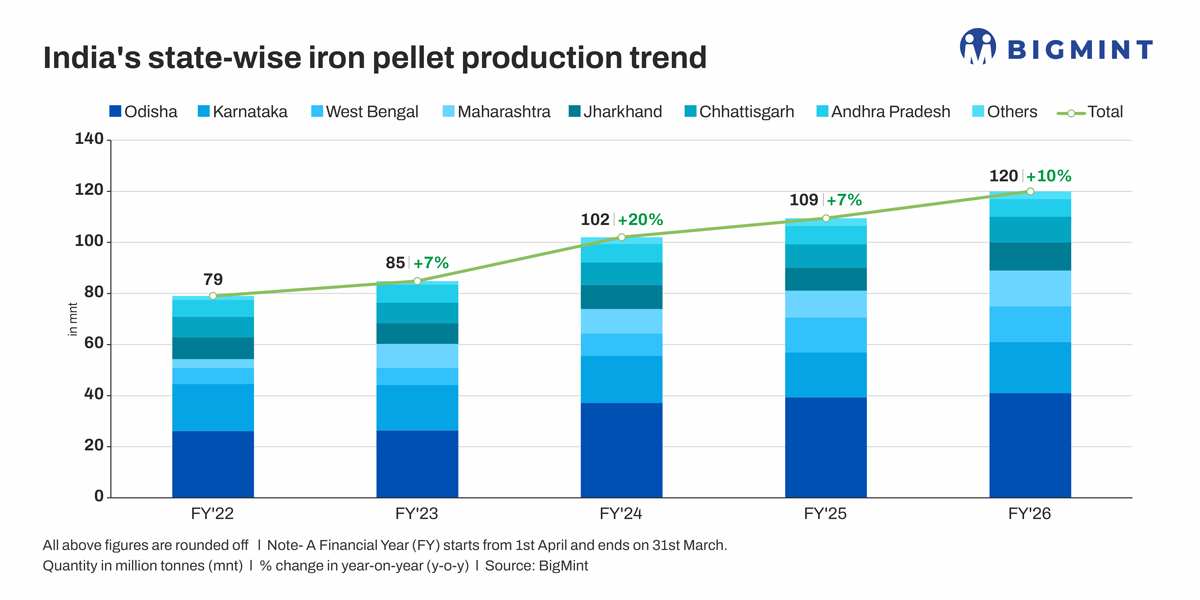
Pellet production increases to 120 mnt in FY'26 (P) from 109 mnt in FY'25 Growth remains clustered, led by Odisha and Maharashtra Capacity utilisation remains a key concernMorning Brief: India's...
01-May-2026
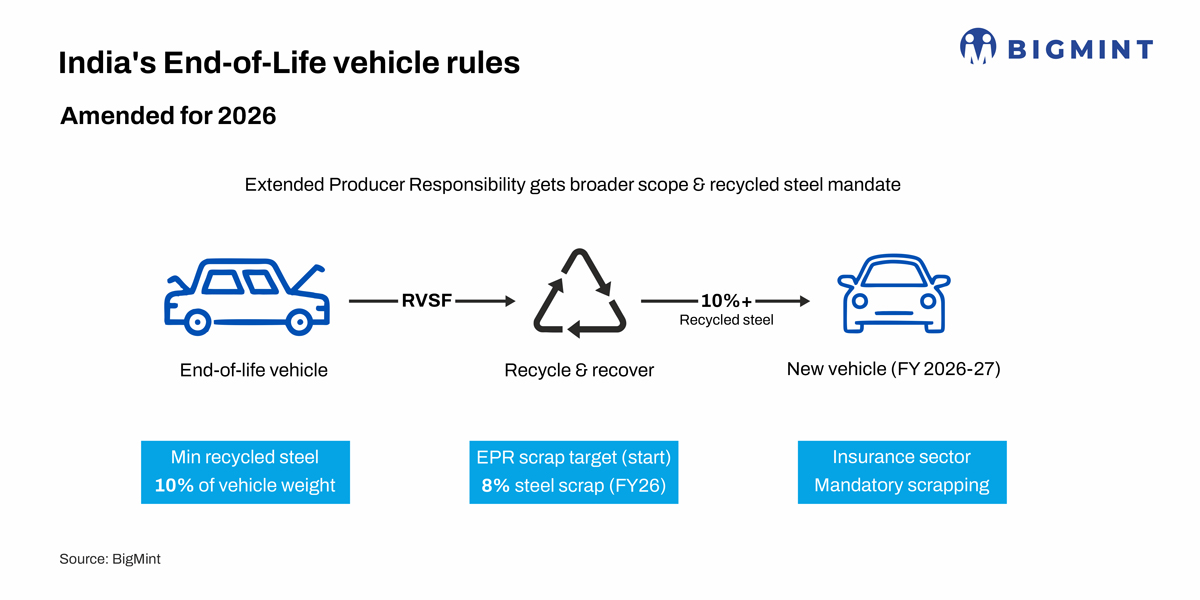
Producers must buy EPR certificates to fulfil targets New waste management rules broaden scope of classificationThe Environment Protection (End-of-Life Vehicles) Amendment Rules, 2026, published on 27 March, 2026, propose significant...
29-April-2026
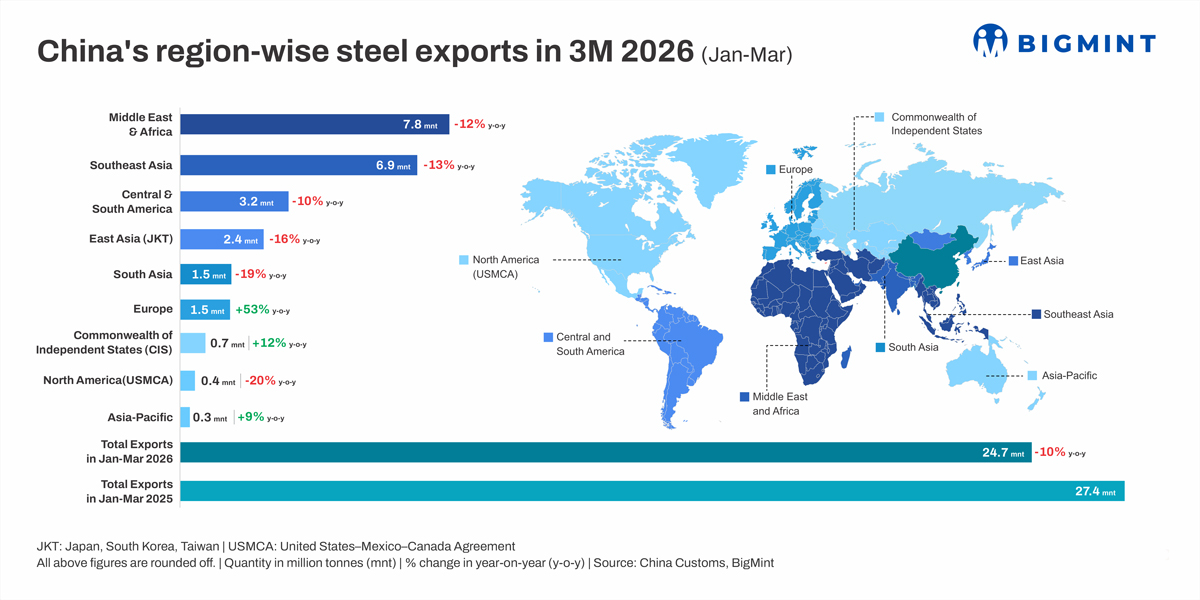
Exports fall to 24.7 mnt in Jan-Mar 2026 amid broad-based regional slowdown Sharp declines across East Asia and South Asia signal weakening intra-Asia demand Growth in Europe fails to offset...
25-April-2026
Imports to stay firm amid supply constraints JSW Steel dominated imports with sharp riseIndias iron ore imports rose to 12.35 million tonnes (mnt) in FY'26, a seven-year high, according to...
25-April-2026
Indonesia strengthens dominance in India's coke market AM/NS India and JSW Steel remain major importersIndia's metallurgical coke (met coke) imports recorded a marginal decline of around 4% y-o-y in FY'26...
25-April-2026
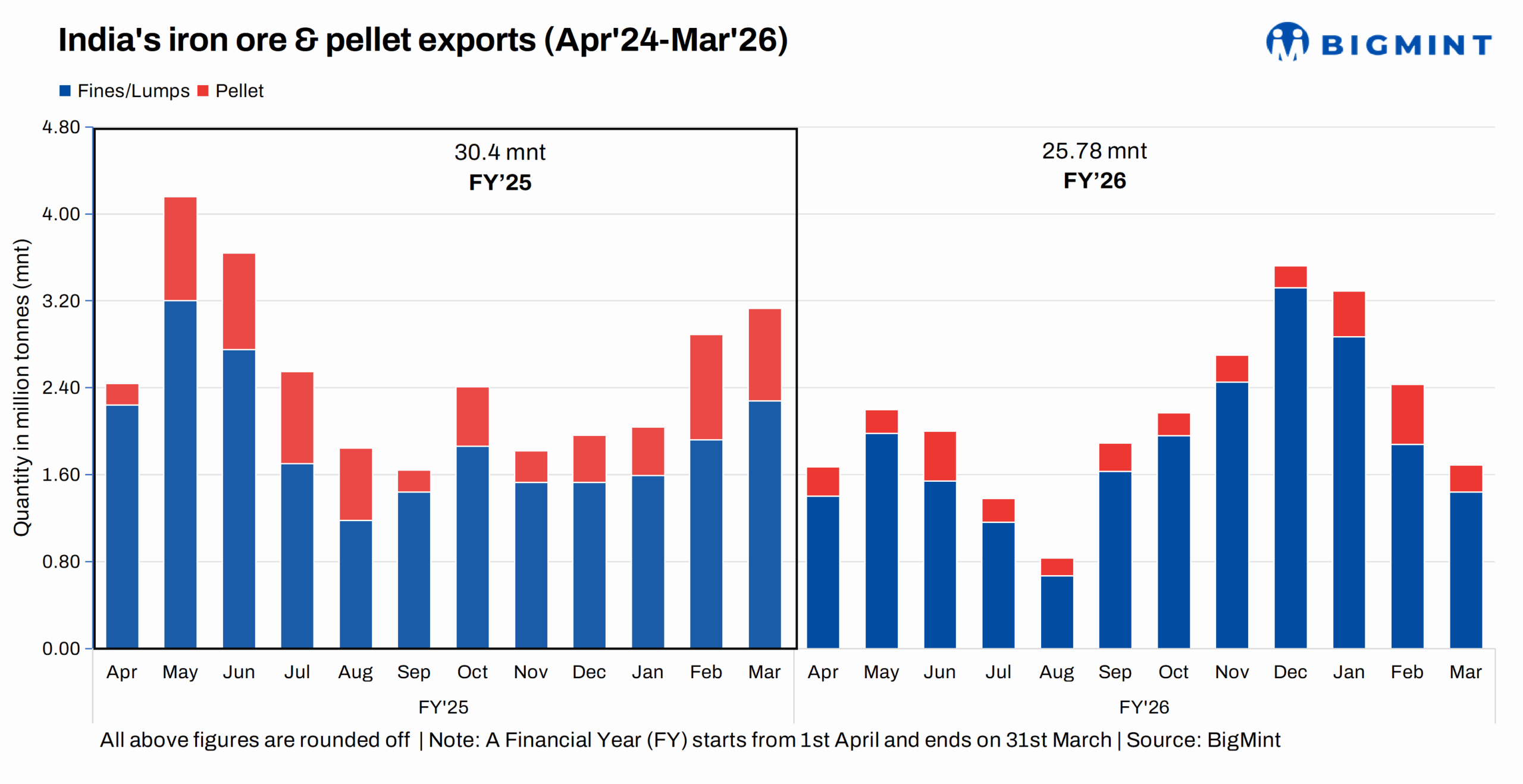
Pellet exports in FY'26 down sharply y-o-y Downtrend continues post FY'24 peak levelsIndia's iron ore and pellet exports decreased by 4.61 million tonnes (mnt) y-o-y in FY'26, with total exports...
24-April-2026
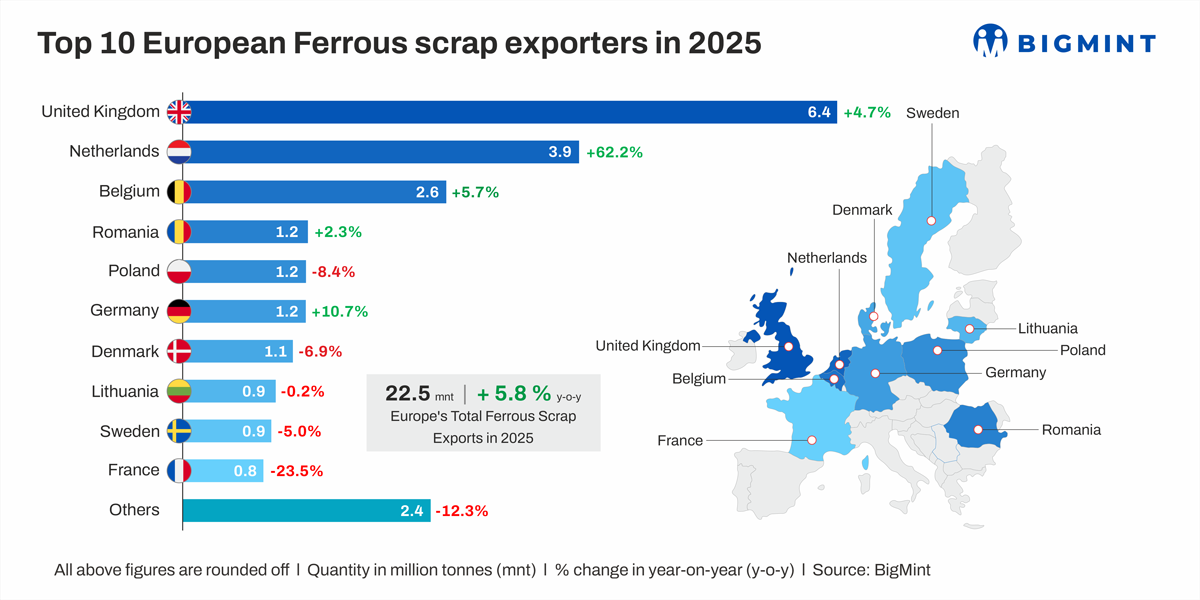
Europe exports over 20% of its scrap outside region Rising scrap intensity fails to lift domestic consumption CBAM, SMAP to support higher domestic scrap retentionMorning Brief: European ferrous scrap exports...
23-April-2026
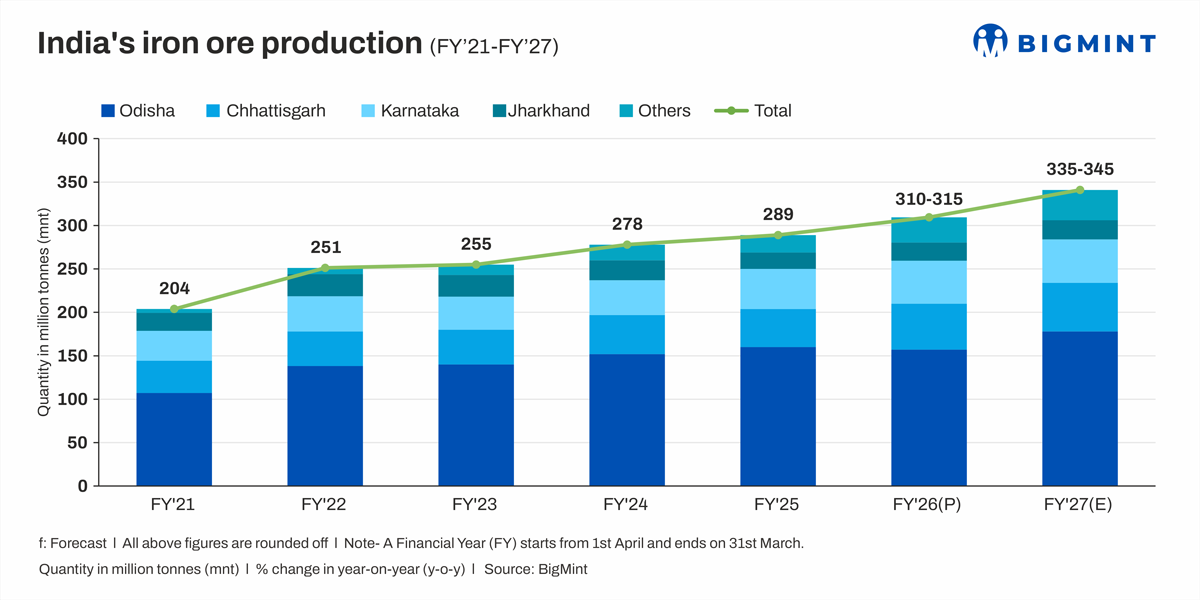
Iron ore output to reach 340-345 mnt in FY'27 Incremental production to remain concentrated in Odisha Private sector ramp-ups to drive marginal supply additionsMorning Brief: India's iron ore production is...
14-April-2026
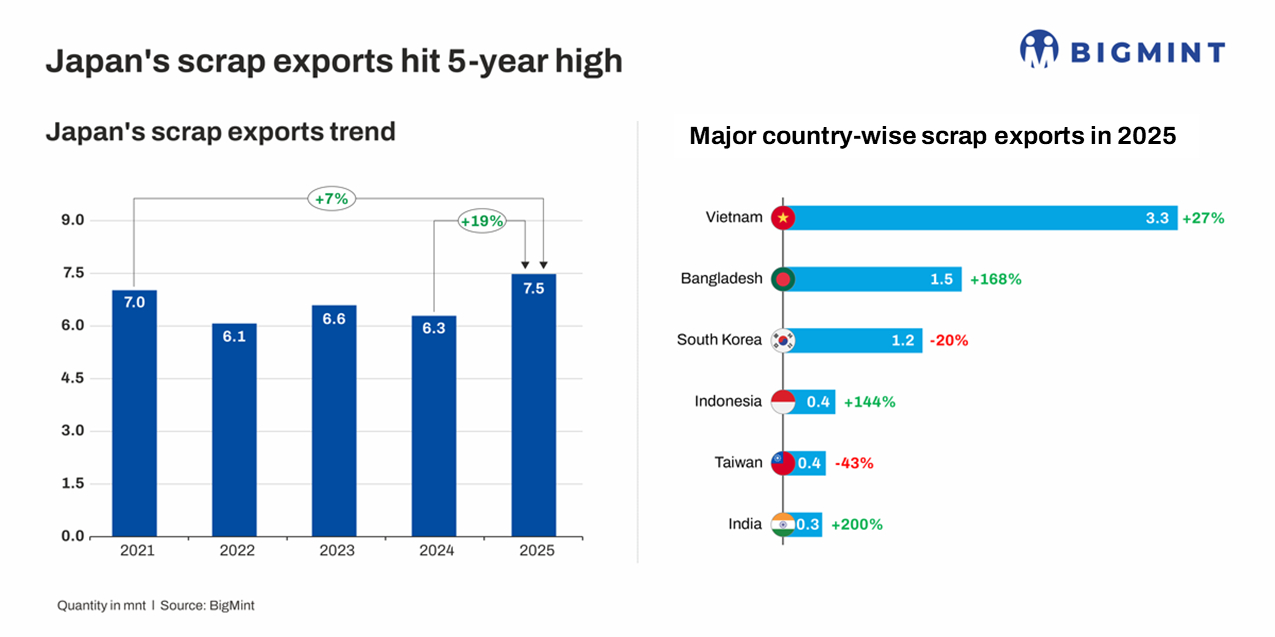
Export mix may improve - less low-grade, more premium scrap Japan's ferrous scrap exports jumped to 5-year high in 2025Japan is set to tighten regulations on the export of metal...
14-April-2026
Power demand up just 1% y-o-y; coal-fired generation dips by 3% Surging renewable, hydropower generation weighs on coal demand South African imports rise 1% despite 8% growth in sponge iron...